01
Export the conversation
WhatsApp, Android SMS, iMessage and Facebook Messenger can all be got out as a file. The walkthrough below shows exactly where to tap for each.
AI relationship counselling
A purpose-built AI counselling tool for couples. Export a WhatsApp, Messenger, SMS or iMessage conversation, upload it, and get a calm, evidence-based read of how the two of you talk — what changed, what keeps repeating, and what is worth trying next. Nothing repeated back to anyone but you.

Where this fits
Developed by professionals, and recommended by counsellors and psychologists to be used a set number of times each week while you are in therapy. Conversation analysis from Neutral Perspective is a starting point, not a diagnosis and not a session — something concrete to bring to a first appointment, or to a therapist the two of you already see, so the hour is not spent reconstructing who said what.
How it works
Recording a conversation out loud, and speaking on your own, are done in the app rather than on this page. What the app does, and what it keeps, is set out here.
01
WhatsApp, Android SMS, iMessage and Facebook Messenger can all be got out as a file. The walkthrough below shows exactly where to tap for each.
02
Choose the file, or several — a WhatsApp export and an SMS backup are read as one conversation — then tell us who is who and pick the stretch of time you want looked at.
03
A written report on the patterns in the conversation: how it changed, anything harmful, what keeps repeating, and what to try next.
Read in memory, deleted the moment your report is written.
Reading the conversation
This usually takes about two minutes. Your chat is deleted as soon as the report is written.
That did not work
WhatsApp calls this “Export chat” and produces a plain text file — choose Without media, since the analysis only reads words. Android SMS and iMessage have no export of their own, so those two take a free app and a few more taps.
In WhatsApp, open the one-to-one chat you want read. Tap the contact’s name at the top to open Contact Info.
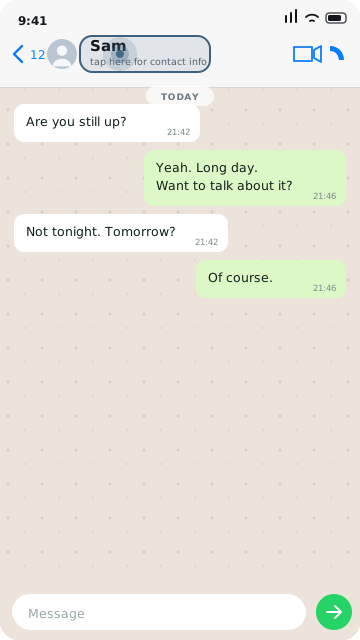
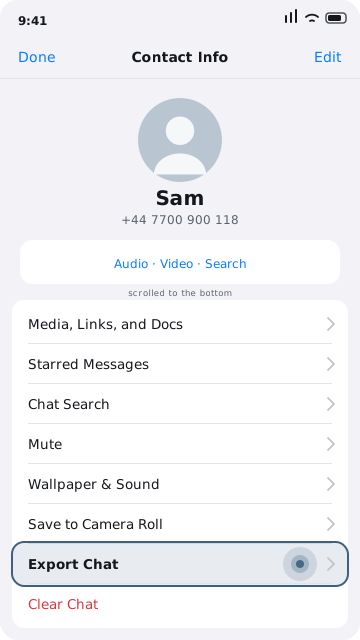
Scroll to the bottom of Contact Info and tap Export Chat.
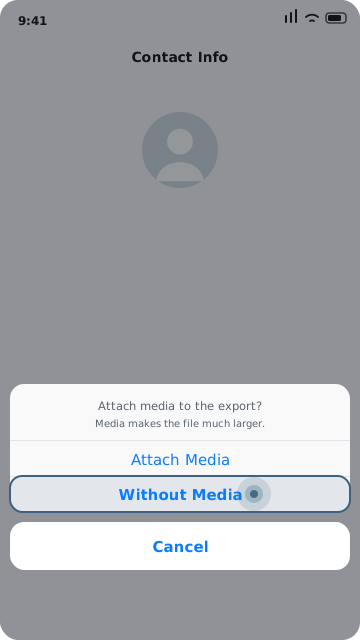
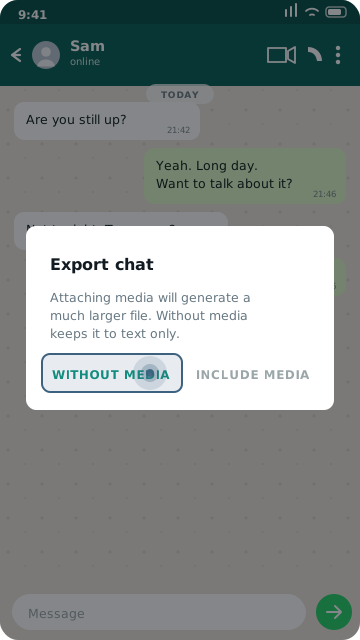
Pick Without Media. This keeps the file small and leaves photos and voice notes on your phone.
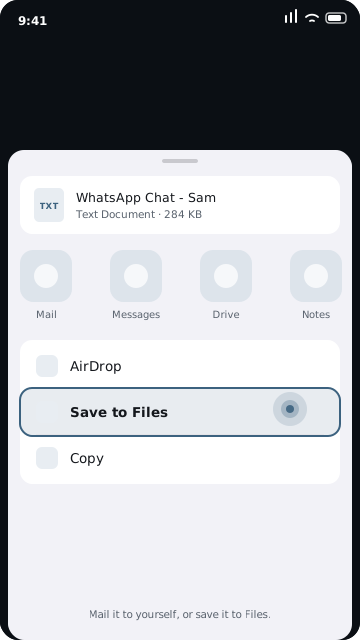
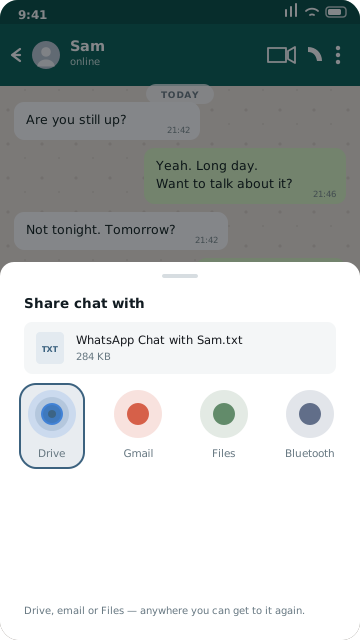
Use the share sheet to mail it to yourself or save it to Files. WhatsApp usually hands over a .zip — upload it as it is, no need to unpack anything.
In WhatsApp, open the one-to-one chat you want read, then tap the three dots at the top right.
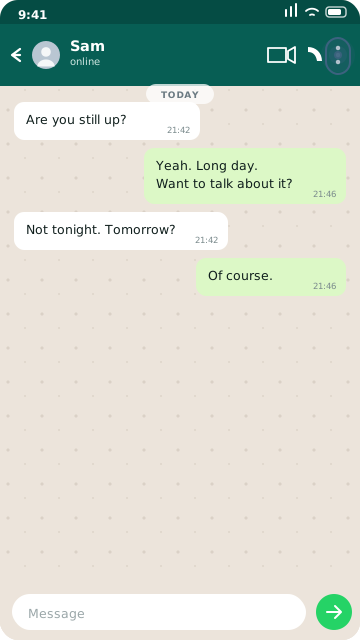
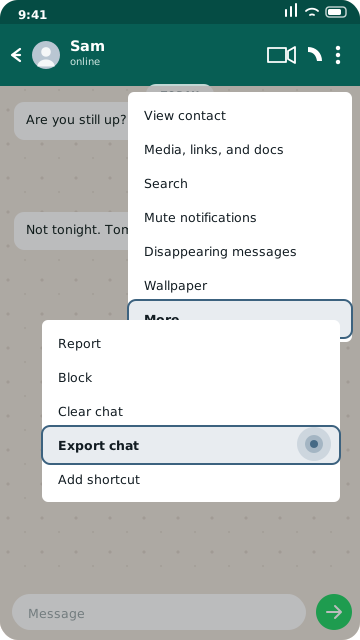
Tap More, then Export chat from the menu that appears.
Pick Without media. This keeps the file small and leaves photos and voice notes on your phone.
Share it to Drive, email or your Files app. You may get a .txt or a .zip; either one uploads as it is.
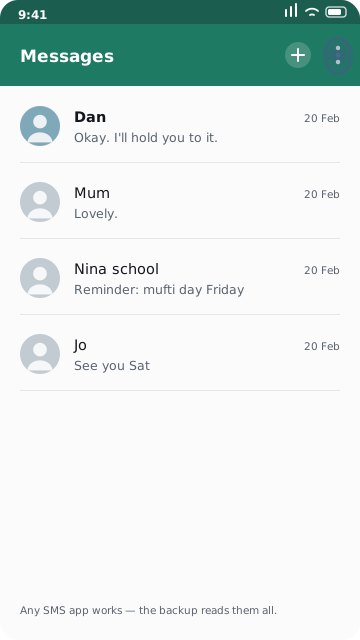
Any SMS app will do — Messages, Textra, whichever you use. You are not exporting from it, so you only need to know whose thread you want read.
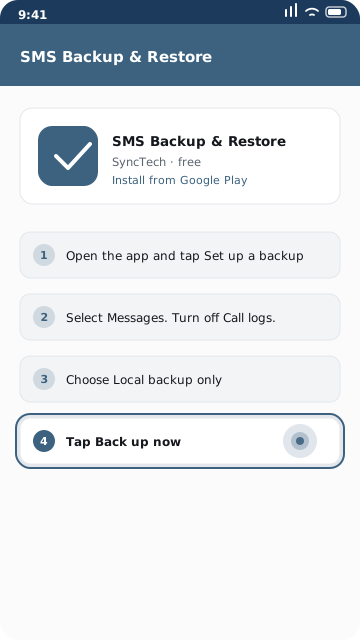
It is free, from SyncTech. Tap Set up a backup, select Messages, turn Call logs off, and if it offers to include attachments, turn that off too — we only read words. Then Back up now.
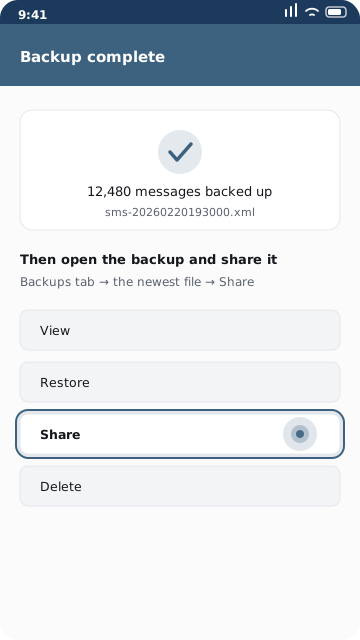
Open the Backups tab, tap the newest file, then Share. The file is named something like sms-20260220193000.xml.
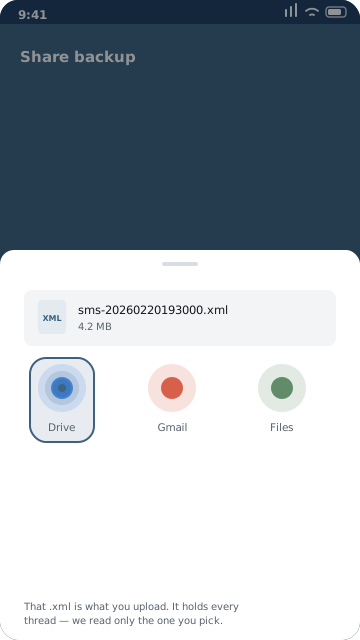
Send it to Drive, email or Files. That .xml is what you upload. It holds every thread on the phone — you choose which one we read.
Apple gives iMessage no export — not on the iPhone, not from iCloud. The messages you need live on a Mac signed in to the same Apple account.
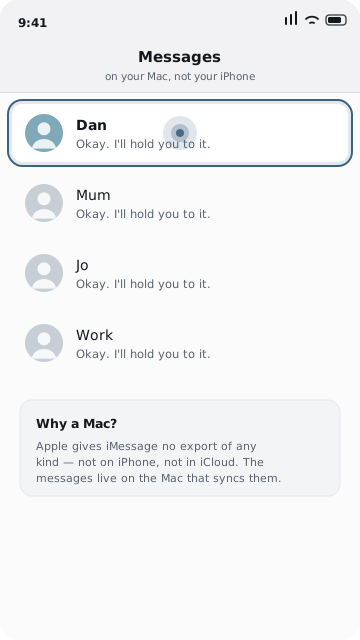
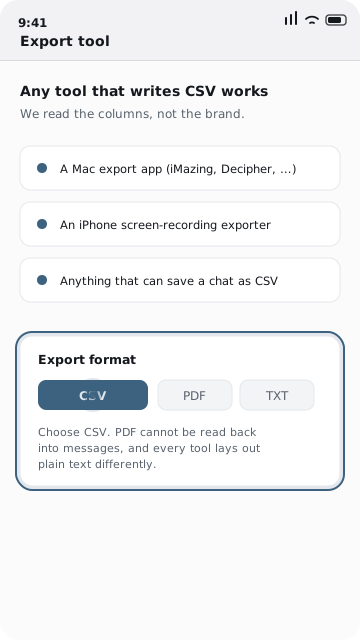
Several Mac apps do this, and one or two iPhone ones. We do not mind which: pick CSV rather than PDF, because a PDF cannot be read back into messages.
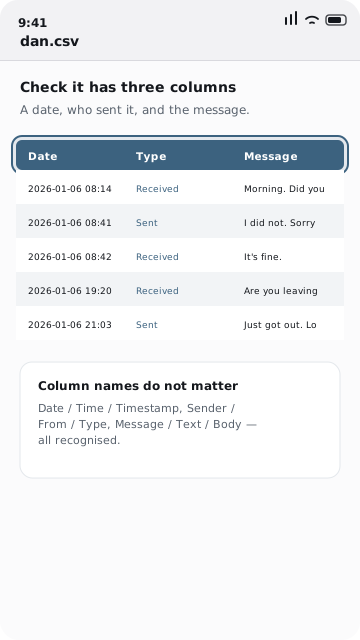
A date, who sent each message, and the message itself. The column names do not matter — Date or Timestamp, Sender or Type, Message or Text are all understood.
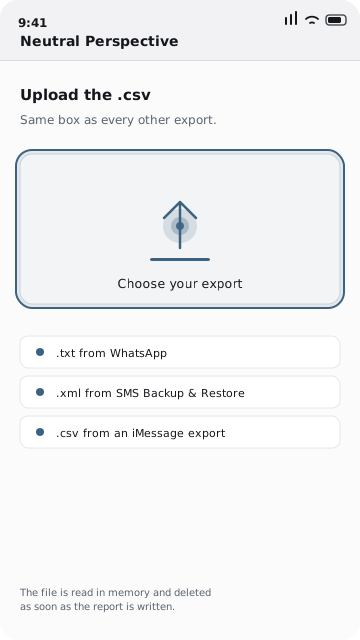
The same box as everything else. If the export only says Sent and Received rather than naming people, we take the other person’s name from the file name.
Facebook has no per-chat export, so this comes from your account settings. On facebook.com go to Settings, then Accounts Centre, then Your information and permissions.
Choose Download your information, then Download or transfer information, and pick the profile whose messages you want.
Select Some of your information, tick Messages and nothing else, choose Download to device, and set the format to JSON rather than HTML. Low media quality keeps the file small — we only read words.
Facebook takes a while and emails you when the file is ready. Download it and upload the .zip as it is — it holds every conversation, and you choose which one we read.
What you get back
Feedback takes the conversation as a whole into account rather than focusing on one particular aspect, which may include a disagreement. Every point made in the feedback is tied to objective data, including quotes from your own conversation.
How the conversation changed
Shifts in tone, length and how quickly you answer each other, and when affection, support or conflict moved.
Anything harmful, named plainly
Dismissiveness, contempt, pressure or control — and, just as plainly, when a rough patch is only a rough patch.
Patterns and themes
The arguments you keep having, the triggers underneath them, the moments of care, and who is carrying the effort.
An overall summary as a timeline
What improved, what got worse, and what has stayed the same the whole way through.
Three things to try this week
Helpful, easy to follow advice.
A sample
An extract from the feedback on an invented conversation between two people who do not exist. A real one runs several pages, and every section can be opened further.
“Disagreements end quickly here, and almost always the same way: Sam changes the subject, and the subject does not come back.”
Patterns and themes
There were 31 disagreements across the 14 weeks. In 23 of them the next message was Sam moving to something practical — “did you want me to grab bread on the way home” — on average 40 minutes later. Alex’s warmth is real when it comes: “I hate it when we’re like this, I’m sorry.” It tends to arrive after the subject has already been closed. The pattern is not that either of you is avoiding the other; it is that the disagreement itself is rarely finished, and 9 of those 31 were about the same thing as a fortnight before.
What to try this week
Repair works better when the subject is named rather than replaced — this is one of the most consistent findings in couples research. Next time things settle, try one sentence about what the disagreement was actually about before moving on to something practical. One sentence is enough; the point is that it gets finished rather than parked.
Every piece of feedback also names anything harmful plainly, shows how the conversation changed over time, and closes with an overall summary.
Privacy
We have a strict privacy policy.
Questions
Sharing a private conversation is a large ask.
No. It is a structured read of one conversation, or a combination of several over a period of time. It sits alongside counselling rather than replacing it, and it will say so when something needs a professional.
A few months reads better than a few days. Patterns need room to repeat before they can be seen, and a report on a bad week will only ever describe a bad week.
No. It will not settle an argument or award blame. It does name harmful behaviour when it sees a pattern of it — that is different from taking a side, and it applies to whoever the messages show doing it.
Recommended only for couples or individuals. An SMS backup holds every thread on your phone — you choose which one we read, and the rest are ignored.
Most major languages, including chats that switch between two. The report is written in whichever language you are reading this page in.
Reading the conversation
This usually takes about two minutes. Your chat is deleted as soon as the report is written.